 New York Architecture Tour
Grand Central Terminal Tour: Every Way to See It
A Grand Central Terminal tour comes in two bookable forms and one free version you can run yourself. Both guided options cost $39 per person and last 90 minutes, but they show different things. One follows the classic route past Vanderbilt Hall and the Whispering Gallery. The other digs for the hidden tennis court and the lost movie theater. This page compares them, then walks you through the building for free. Grand Central opened on February 2, 1913 and drew about 21.6 million visitors in 2018, so a little direction helps. For the wider picture, see every New York architecture tour.
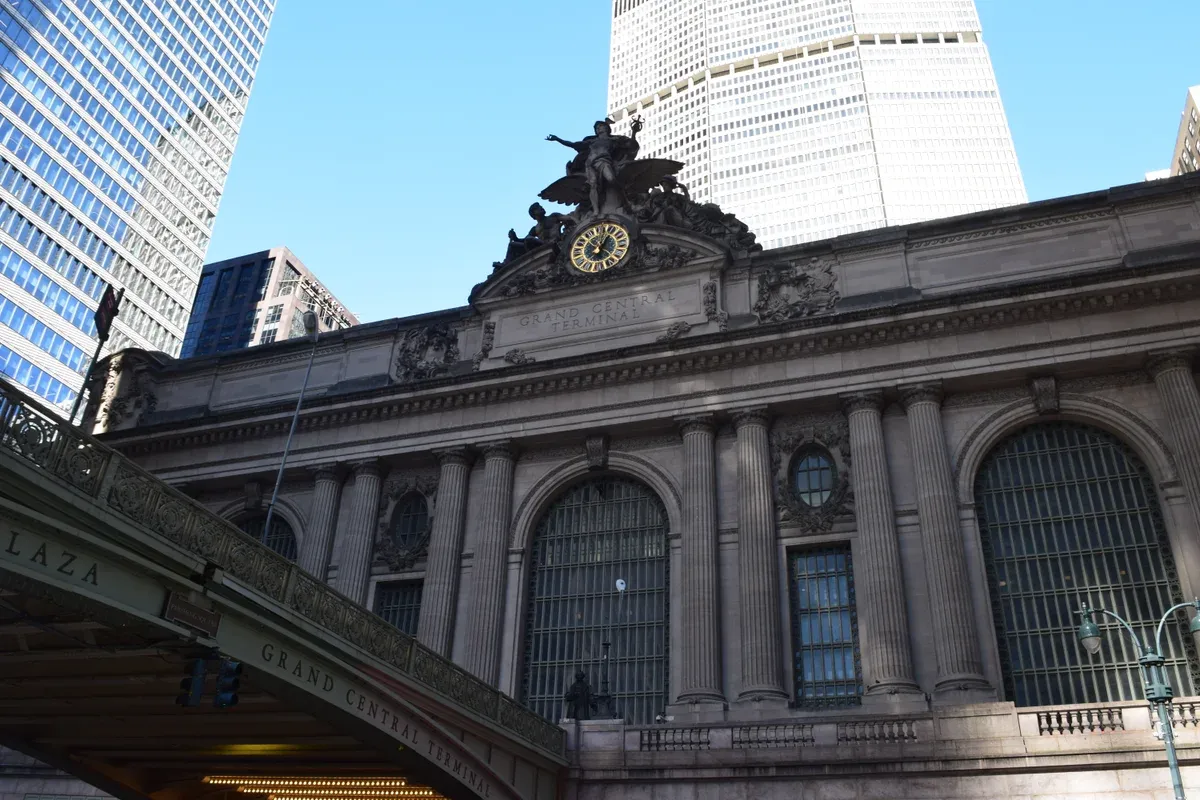
The 42nd Street facade of Grand Central Terminal with the Glory of Commerce statue at the top. Photo: TheCatalyst31, CC BY-SA 4.0, via Wikimedia Commons
Quick answer Grand Central tours at a glance
A guided Grand Central Terminal tour costs $39 per person and runs 90 minutes. Several operators offer one. The official tour by Walks covers the main concourse, Vanderbilt Hall, the Whispering Gallery and the Campbell. The Grand Central Station Secrets Small Group Tour by Untapped New York, also $39, hunts the hidden spaces instead. Entry to the terminal itself is free, and the concourse, ceiling, clock and Whispering Gallery can all be seen without paying anything.
Key takeaways
- Compare both bookable tours in the Grand Central tours compared, with prices, lengths and group caps side by side.
- Pick the official Grand Central Terminal guided tour for a classic route that includes the Campbell bar.
- Pick the Grand Central secrets tour for the hidden tennis court, the backwards ceiling story and a group capped at 15.
- Travelling without spending? Jump to seeing Grand Central for free for the self-guided route and opening hours.
The Grand Central Tours Compared
Both bookable tours cost the same and take the same 90 minutes, so the choice comes down to what you want to see and how the group is run.
Side by Side
The figures below come from the tour listings as published. Both operators sell free cancellation up to 24 hours ahead, and neither includes tips. The official tour is run by Walks - US, while the secrets tour is run by Untapped New York. Ratings come from the listings themselves.
One honest note on what a tour does and does not include. Neither listing promises entry into any building or any paid attraction. Both are walking tours inside and around a public terminal, and Grand Central is open to everyone daily from 5:15 AM to 2:00 AM, so no tour holds a key you cannot otherwise use.
| Tour | Price | Length | Group | Shows |
|---|---|---|---|---|
| Official Grand Central Terminal Guided Tour | $39 per person | 1.5 hours | Private or small groups, size not stated | Main concourse and clock, Vanderbilt Hall, Tiffany clock, Whispering Gallery, the Campbell, Grand Central Market, a 1920s speakeasy |
| Grand Central Station Secrets Small Group Tour | $39 per person | 1 hour 30 minutes | Up to 15, earpiece for every guest | Main concourse and ceiling, hidden tennis court, glass walkways, former cocktail bar and jail, lost movie theater, Vanderbilt family symbols |
Which One to Pick
Choose the official Grand Central Terminal guided tour if you want the canonical route. It starts at the GCT Tours booth in the Main Concourse, just right of the Harlem and Hudson Line departures, and it covers the four names every visitor asks about. The listing carries a 4.7 rating from 283 reviews.
Choose the Grand Central Station Secrets Small Group Tour if you have seen the concourse before, or if you travel with children who like stories about hidden tennis courts and speakeasies. It meets in front of Track 29, caps the group at 15, issues an earpiece to every guest and holds a 4.9 rating from 2,029 reviews. It is also the pick among the two for reviewers' scores.
Want more than the terminal? Midtown's Art Deco towers are a separate subject, and the Art Deco Midtown walk covers Grand Central together with the Chrysler Building and Rockefeller Center on its own page.
Sources: NYC Landmarks Preservation Commission, AIA New York tours, New York Public Library tours
Seeing Grand Central for Free
The terminal is a public building, and the headline sights cost nothing to visit on your own.
The Main Concourse and the Ceiling
Is it free to visit Grand Central Terminal? Yes. The terminal's own website says it is open to the public daily from 5:15 AM to 2:00 AM, with shop and restaurant hours that may differ. No ticket is needed to walk the Main Concourse, which sits at 89 East 42nd Street and is served by the 4, 5, 6 and 7 trains plus the 42nd Street Shuttle.
Look up at the ceiling, which carries a mural of the constellations. A restoration finished in 1998 cleaned the painted sky, and conservators left a 9-by-18-inch rectangle untouched in the northwest corner, near the Cancer constellation, so future restorers can test how the cleaning chemicals affect the paint. The dark grime you still see is popularly blamed on cigarette smoke, but History.com reports the restoration found the real culprits were car and truck exhaust, industrial emissions and incinerator soot.
The Clocks
The four-sided brass clock above the central information booth is the meeting point of the whole concourse, and it dates to about 1913. Walk outside and look up at the facade, where a Tiffany clock has faced 42nd Street since it was installed in 1914. That one stands about 14 feet tall and was restored in 1992.
The Whispering Gallery and Vanderbilt Hall
Near the Oyster Bar, the ramps that drop to the lower level span 302 feet and carry Guastavino tiling on their undersides. Rafael Guastavino brought the tile system to the United States in 1885 and patented it in 1892, building vaults from interlocking terracotta tiles less than 1 inch thick laid in herringbone patterns. Stand facing a corner and whisper. A person in the diagonally opposite corner hears you through the curve of the tiles.
Vanderbilt Hall measures 65 by 205 feet and was formerly the main waiting room for intercity travelers. It was renovated in 1991. The Oyster Bar, which opened with the terminal in 1913 under the name Grand Central Terminal Restaurant, still serves on the lower level under its own Guastavino vaults, with a single black brick left from the 1998 restoration as a reminder of what indoor smoking once did. A 1997 fire had briefly closed it for renovations.
How Long to Spend
Google searchers often ask how long to budget. No official source states how long a self-guided visit takes, so plan around your own pace. Add time if you eat at the Oyster Bar or browse Grand Central Market. Roughly 750,000 people a day pass through, according to History.com, so the concourse photographs best early on a weekday.
If you want narration, the Grand Central secrets tour hands each guest an earpiece.
The building itself has a story worth knowing while you walk. Reed and Stem and Warren and Wetmore designed it in the Beaux-Arts style, it opened on February 2, 1913, and it holds 44 platforms and 67 tracks, of which 41 are in passenger service. New York landmarked the facade on August 2, 1967 and the interior on September 23, 1980, and the terminal became a National Historic Landmark on December 8, 1976. The Supreme Court case that saved it from Marcel Breuer's proposed 55-story tower above the concourse was decided 6-3 on June 26, 1978. You can read more in the guide to famous buildings in NYC.
The Hidden World of Grand Central Terminal
A documentary on how the terminal works behind the public halls. Third-party video by Free Documentary. This site did not shoot it and has no relationship with the creator.
From Vanderbilt to the Supreme Court
Grand Central Terminal has been standing, threatened, saved and restored over more than a century. The dates below come from Wikipedia, the MTA and History.com.
Key Dates in the Building's Story
The table gathers the years that matter most. Cornelius Vanderbilt's New York Central Railroad built the terminal we know, and later generations fought over whether it would survive. The most important date is 1978, when the US Supreme Court decided the case that kept the building intact and shaped preservation law across the country.
| Year | What happened |
|---|---|
| 1913 | Grand Central Terminal opened on February 2, 1913, designed by Reed and Stem and Warren and Wetmore in the Beaux-Arts style. |
| 1926 | The Graybar Passage was built, with seven groin vaults and bronze chandeliers. |
| 1963 | Demolition of the original Penn Station began on October 28, which shocked the city into passing its 1965 Landmarks Law. |
| 1965 | The Landmarks Law was passed with legislation signed by Mayor Robert F. Wagner. Sources date the commission itself to 1962 or 1965. |
| 1967 | The city designated the terminal's facade a landmark on August 2. |
| 1976 | The terminal became a National Historic Landmark on December 8. |
| 1978 | Penn Central v. New York City was decided by the US Supreme Court on June 26, by a 6-3 vote. |
| 1980 | The city designated the terminal's interior a landmark on September 23. |
| 1991 | Vanderbilt Hall, once the main waiting room for intercity travelers, was renovated. |
| 1998 | The Main Concourse ceiling restoration was completed, and the Oyster Bar ramps were restored. |
| 1999 | The Grand Central North passageways opened on August 18 at a final cost of $75 million. |
| 2023 | Grand Central Madison, the LIRR terminal below, began partial service to Jamaica on January 25, with full service from February 27. |
The 1978 Supreme Court Case
Penn Central wanted to build above its terminal. The Landmarks Preservation Commission rejected two proposals drawn by Marcel Breuer, a 55-story cantilevered tower and a 53-story structure that would have required demolishing part of the building. The railroad sued, and the case reached the US Supreme Court.
On June 26, 1978 the Court ruled 6-3, in an opinion by Justice William J. Brennan Jr., that landmark restrictions were not a taking. Penn Central could keep using the property as it had for the previous 65 years. The decision set the multi-factor test still used for regulatory takings claims: economic impact, interference with investment-backed expectations, and the character of the government action. Jacqueline Kennedy Onassis supported the preservation effort and travelled to Washington for the oral arguments.
The guided options, from the official Grand Central Terminal guided tour to the secrets small group tour, walk the same building, and this case is the reason the concourse ceiling still stands for anyone to look at.
The Ceiling Restoration
The 1998 restoration cleaned the Main Concourse ceiling and left one 9-by-18-inch rectangle untouched in the northwest corner, near the Cancer constellation. The MTA says the patch was left so future conservators can test how the cleaning solutions affect the paint. Conservator John Canning calls it a scientific reference.
There is a second dark detail. A popular story blames decades of cigarette smoke for the grime. History.com reports the restoration found it came from car and truck exhaust, industrial emissions and incinerator soot instead. The Oyster Bar ramps restoration left a single black brick in place as a reminder of the effects of indoor smoking.
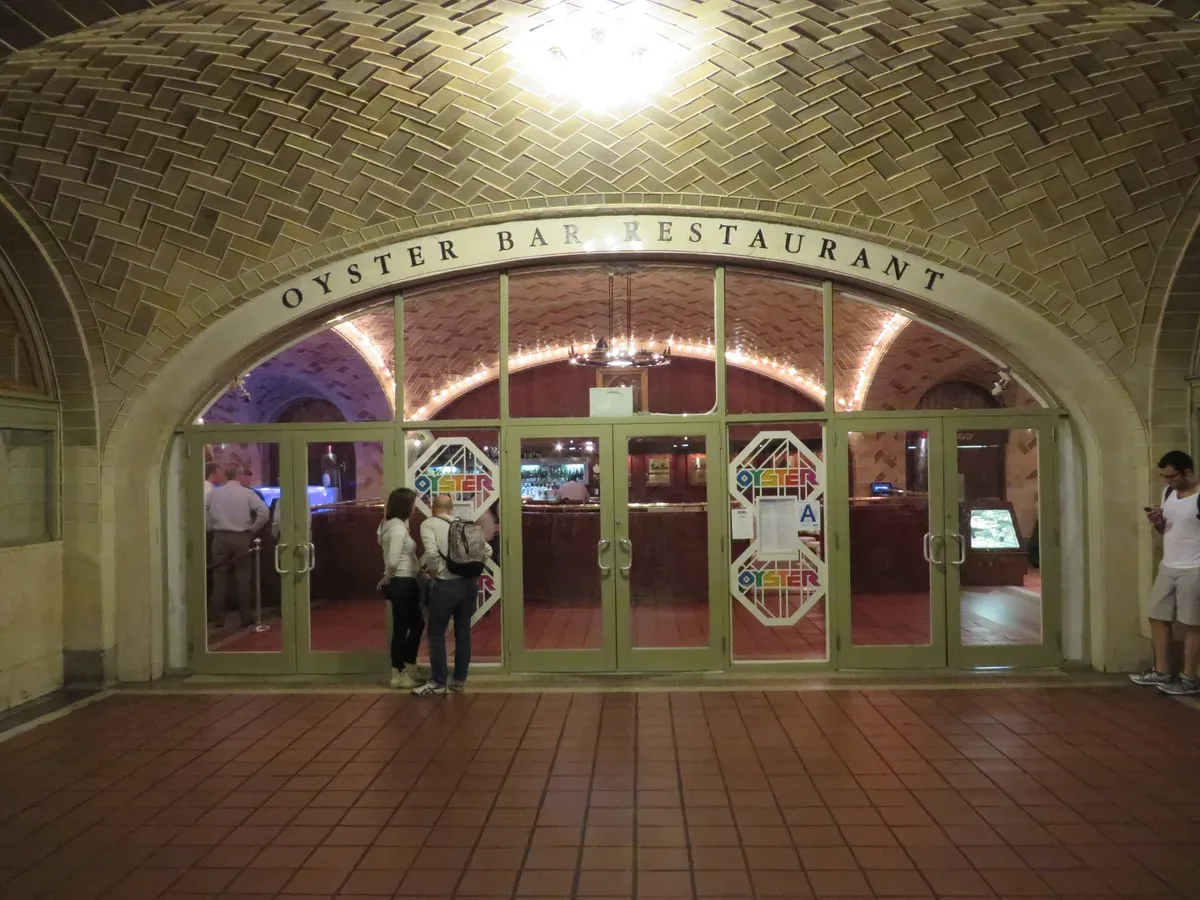
The entrance to the Grand Central Oyster Bar on the lower dining concourse. Photo: Leonard J. DeFrancisci, CC BY-SA 3.0, via Wikimedia Commons
Details a Guide Points Out
The terminal rewards a second look. These are the features guides single out, with the facts each one carries.
The Ceiling and the Clock
The Main Concourse ceiling carries a constellation mural, cleaned in the restoration that finished in 1998 with the small patch left bare. At the center of the concourse stands the four-sided brass clock on the information booth, dating to about 1913. Outside, the Tiffany clock facing 42nd Street was installed in 1914, stands about 14 feet tall and was restored in 1992.
History.com reports that around 750,000 people pass through the terminal each day, so pausing to look up is easier said than done. The official guided tour at $39 per person lists the information booth clock and the Tiffany clock, and the secrets small group tour at $39 per person covers the main concourse and ceiling.
Guastavino Tile and the Whispering Gallery
Rafael Guastavino introduced his tiled vaulting to the United States in 1885 and patented it in 1892. The vaults use interlocking terracotta tiles less than 1 inch thick, laid in herringbone patterns and set in three courses. Under the Oyster Bar ramps landing, this tiling covers the underside of the bridge and forms the Whispering Gallery, where a whisper in one corner can be heard in the diagonally opposite corner.
The ramps connecting to the lower level span 302 feet. Wikipedia lists the Oyster Bar and the Whispering Gallery among Guastavino installations, alongside the Boston Public Library and the Cathedral of St. John the Divine.
The Oyster Bar and The Campbell
The Oyster Bar opened with the terminal in 1913, first as the Grand Central Terminal Restaurant, and still has its vaulted Guastavino-tiled ceilings on the lower level. A 1997 fire closed it briefly for renovations.
The Campbell cocktail lounge sits just south of the 43rd Street and Vanderbilt Avenue entrance, in what was the 1920s office of John W. Campbell. He decorated it to resemble the galleried hall of a 13th-century Florentine palace. The space opened as the Campbell Apartment bar in 1999 and was renamed the Campbell in 2017. The official guided tour includes a stop here, while the secrets tour covers a former cocktail bar that once served as an office, a speakeasy and a jail.
Vanderbilt Hall, the Biltmore Room and Track 61
Vanderbilt Hall measures 65 by 205 feet and was formerly the main waiting room for intercity travelers. The Biltmore Room is a marble hall serving tracks 39 through 42, nicknamed the Kissing Room for the greetings exchanged there, and it now connects to Grand Central Madison. Giorgio Cavaglieri was hired in 1985 to restore its cracked marble and makeshift lighting, and the room reopened in 2023.
Track 61 is a private track under the Waldorf Astoria, part of the hotel's original design and mentioned by The New York Times in 1929. General John J. Pershing is recorded as the first person to use it, on April 20, 1938, and Franklin D. Roosevelt later used it. It is one of twelve Lex Yard tracks numbered 51 through 65, and tracks 57, 58 and 62 do not exist. The secrets small group tour also covers the hidden tennis court and the lost movie theater in the building.
Do and Don't
Simple rules drawn from the hours, meeting points and layout described above.
Do
- Do arrive early if you are taking a guided tour, because the official tour meets at the GCT Tours booth in the Main Concourse and the secrets tour meets in front of Track 29, and each guide holds a sign.
- Do plan your visit around the terminal's public hours of 5:15 AM to 2:00 AM daily, because shop and restaurant hours may differ and The Campbell or the Oyster Bar may not be open for the full window.
- Do look up at the ceiling in the Main Concourse and find the untouched 9-by-18-inch patch in the northwest corner near the Cancer constellation, because it is the best story in the building and costs nothing.
- Do test the Whispering Gallery under the Oyster Bar ramps, because the Guastavino tiling carries a whisper from one corner to the diagonally opposite corner, and you can try it on any self-guided visit.
- Do combine your terminal visit with the surrounding Art Deco, because the Art Deco and Architecture Midtown Landmarks Tour at $40 per person links Grand Central with the Chrysler Building and Rockefeller Center in 2 hours 30 minutes.
Don't
- Don't assume a tour ticket includes anything beyond the walk, because the listings state gratuities, and hotel pickup and drop-off in the official tour's case, are not included.
- Don't expect a tour to take you onto the platforms or into Track 61, because no listing in the catalog promises track access, and Track 61 is a private track under the Waldorf Astoria.
- Don't believe the cigarette smoke story about the dark ceiling patch, because the restoration found the grime came from car and truck exhaust, industrial emissions and incinerator soot.
- Don't drive to the terminal without checking transit first, because the 4, 5, 6 and 7 trains plus the 42nd Street Shuttle (S) stop directly at 89 East 42nd Street.
Hotels Near Grand Central and Midtown East
Each link opens the live room list for that area on the booking site, with today's prices. Both Grand Central tours meet inside the Main Concourse, and the Art Deco walk starts by Bryant Park.
Midtown East
- Suits
- Grand Central, the Chrysler Building and the Art Deco walk
Grand Central Terminal stands at 42nd Street and Park Avenue.
See stays in Midtown East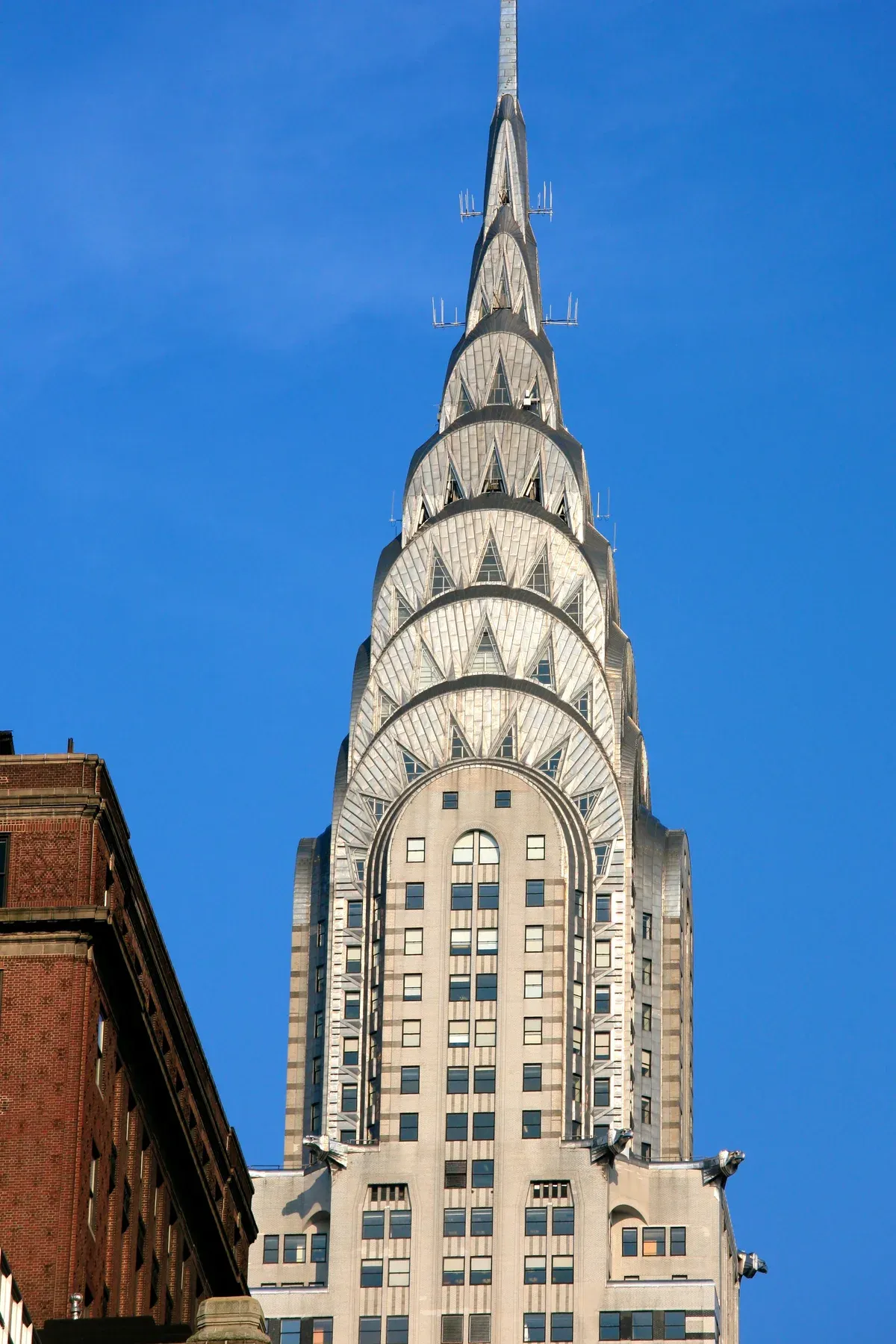
Murray Hill
- Suits
- A quieter base south of Grand Central
Murray Hill lies just south of the terminal.
See stays in Murray Hill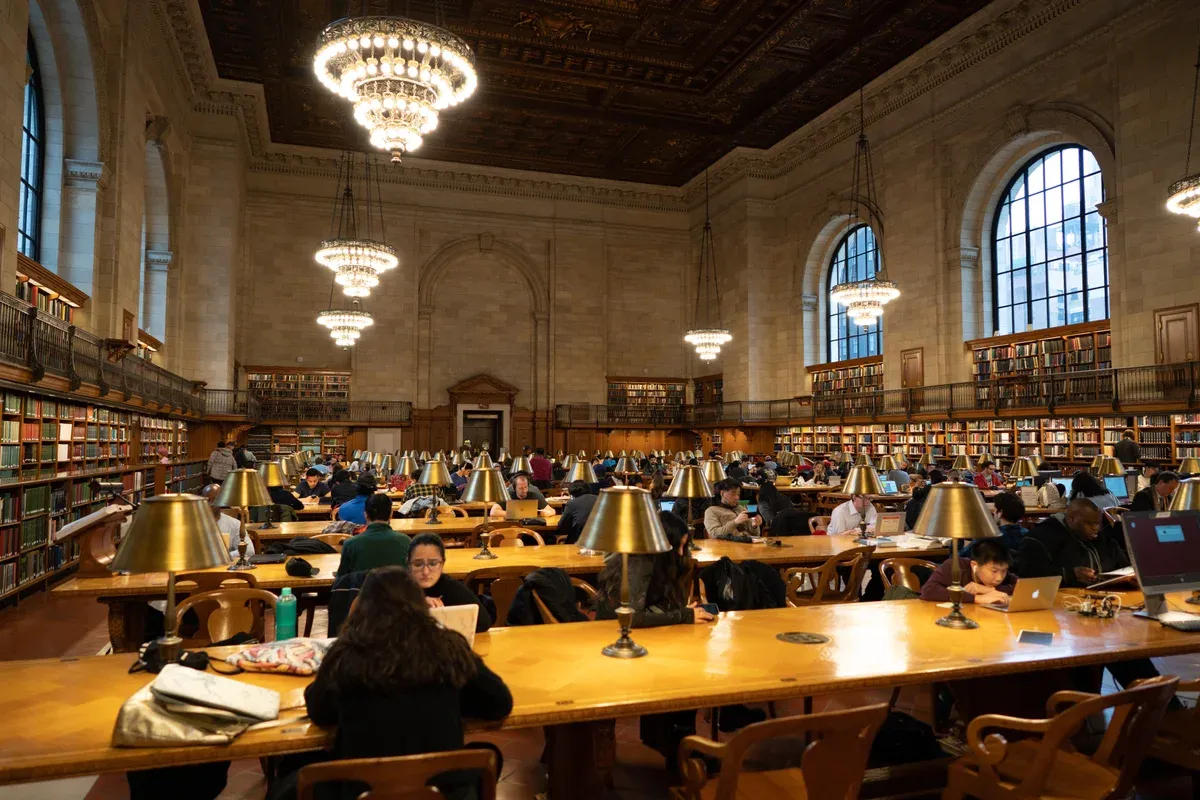
Bryant Park
- Suits
- The library and the Midtown walk's meeting point
The Art Deco walk meets on 6th Avenue by Bryant Park.
See stays in Bryant ParkFrequently Asked Questions
Is it free to visit Grand Central Terminal?
The terminal itself is public space, open daily from 5:15 AM to 2:00 AM according to its own website, so walking in costs nothing. What you pay for is interpretation. A guided option such as the Grand Central Station Secrets Small Group Tour costs $39 per person, and the free and self-guided route on New York architecture tours costs nothing at all.
Can you take a tour of Grand Central Terminal?
Yes. Three bookable ways exist: the official 90-minute tour run by Walks, listed at the official guided tour listing, Untapped New York's secrets tour, and the Municipal Art Society, which lists a Grand Central Terminal walking tour among its offerings. Compare them on the New York architecture tour.
How long should I spend at Grand Central Terminal?
No official source states how long a self-guided visit takes. Both guided tours run 90 minutes, and the official one lists the clock, Vanderbilt Hall and the Campbell among its stops.
Which Grand Central tour shows the most secrets?
The secrets tour by Untapped New York lists the hidden tennis court, the glass walkways entrance, a former cocktail bar that was an office, a speakeasy and a jail, the lost movie theater and the Vanderbilt family symbols. See the full rundown in the Grand Central secrets tour review.
Is there a free way to tour Grand Central Terminal?
Yes, part one of this guide covers it: the terminal is open to the public and the main features are visible without a ticket. The free and self-guided section gives the route, and if you want more, the official guided tour is the paid deep dive.
Does Grand Central Terminal still exist and still work as a station?
It does. The terminal has 44 platforms and 67 tracks, of which 41 are in active passenger service, and History.com reports roughly 750,000 people pass through each day, making it the third-busiest station in North America after New York Penn Station and Toronto's Union Station. The Art Deco Midtown walk passes through it as part of a wider route.